Zakat is not charity. It is a due owed on wealth that has sat with you for a lunar year, and it belongs to people who qualify to receive it. Here is how to work out whether you owe it, how much, and what it pays for at MMO.
Most people know Zakat as one of the five pillars of Islam. Fewer are comfortable actually calculating it, and a lot of donors tell us they have been guessing for years. This is a plain walkthrough: what Zakat is, who owes it, how the sum works, and what it pays for once it reaches us.
Zakat is a due, not a donation
The distinction matters. Sadaqah is voluntary, given whenever you like and in any amount. Zakat is obligatory on qualifying wealth, calculated at a fixed rate, and it is owed to specific categories of people named in the Qur’an. Once your wealth passes the threshold, that share is no longer yours to allocate freely; it belongs to those entitled to receive it.
That is why we ring-fence Zakat at MMO rather than pooling it with general funds. It is not our money to spend on a new roof or an administrator’s salary.
Do you owe it? The nisab threshold
Zakat becomes due when your net wealth stays above a threshold called nisab for one full lunar year. Nisab is defined against either gold or silver:
- Gold standard: the value of 87.48 grams of gold
- Silver standard: the value of 612.36 grams of silver
Silver gives a lower threshold, which means more people qualify to give. Many scholars recommend it for exactly that reason. Because metal prices move daily, the rupee value of nisab changes daily too, so check the current rate before you calculate rather than relying on last year’s figure.
Working out the amount
The rate is 2.5% of your net zakatable wealth. To get that figure, add up what you own and subtract what you owe.
What counts as zakatable wealth:
- Cash in hand and in bank accounts
- Gold and silver, at current resale value
- Investments, shares and business stock
- Money owed to you that you reasonably expect to be repaid
What you subtract:
- Debts that are due now
- Immediate living costs, such as this month’s bills
Your home, your car and the tools of your trade are not zakatable. Neither is wealth you have held for less than a lunar year.
Why orphans qualify
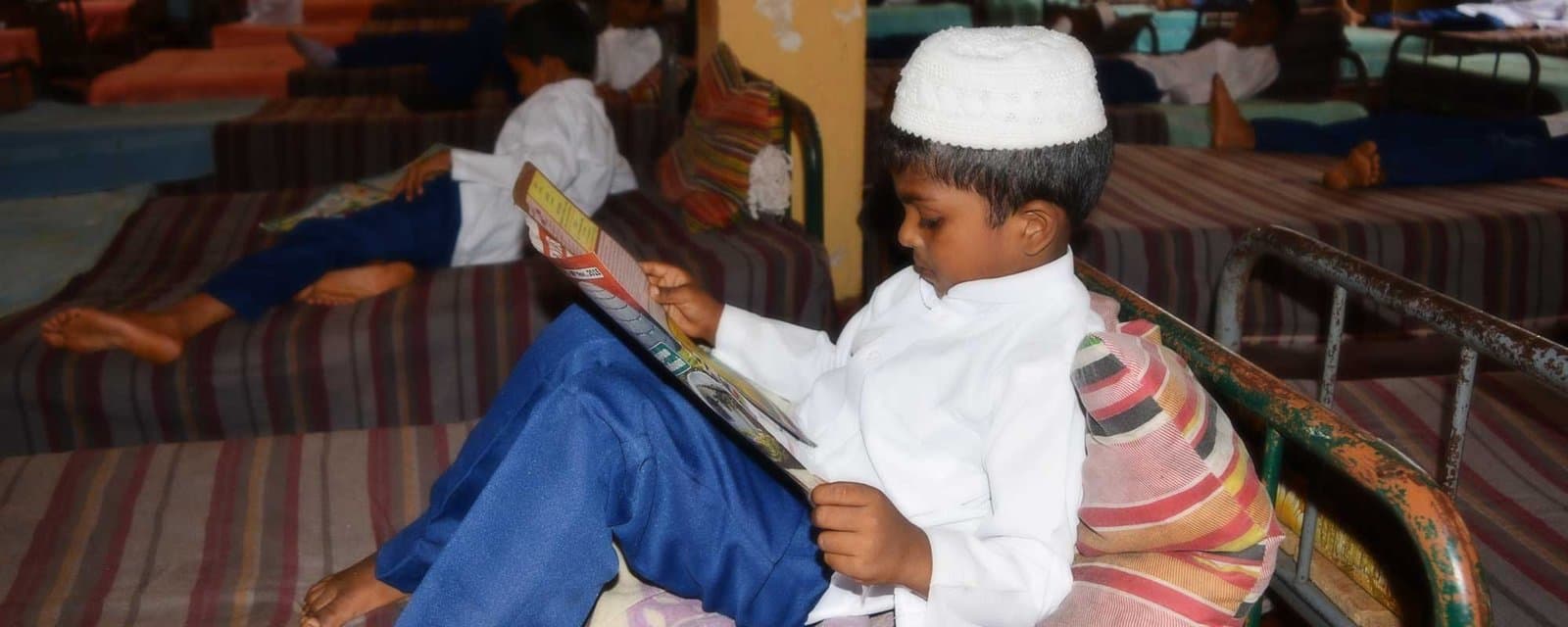
The Qur’an names eight categories of people eligible to receive Zakat. The orphaned children in our care fall squarely within the poor and the needy: they have lost the family support that would otherwise feed, clothe and school them, and they have no independent means of their own.
Whoever cares for an orphan, he and I will be like these two in Paradise.
What your Zakat pays for at MMO
Zakat given to us is spent strictly on the direct needs of the children. In practice that means three things:
- Feeding: three meals a day, every day of the year, for around 600 children. The kitchen does not close, and food is the single largest recurring cost we carry.
- Education: books, uniforms, shoes, exam fees and after-school tuition for children who arrived behind their grade level and need to catch up.
- Clothing: everyday clothes, replacements as children grow, and warm layers, alongside medical treatment when a child falls ill.
It is never spent on construction, administration or staff salaries. Those come from our general fund and rental income, which is exactly why the general fund matters too.
Common questions
Can I split my Zakat between causes? Yes. There is no requirement to give it all to one organisation.
Can I pay in instalments? Yes, as long as the full amount is paid for the year in question.
What if I have missed previous years? Calculate what was owed for each year you missed and pay it as soon as you are able. Scholars treat the debt as still outstanding rather than lapsed.
If you are unsure about your own circumstances, ask a scholar you trust. We can tell you what happens to the money once it reaches us; we cannot give you a fatwa on your personal situation.
Ready to give?
Zakat, Sadaqah, or sponsoring one child for a year. Every rupee goes to the children in our care.
Go to the donation page